.png)
Photobiomodulation for Retinal Health: How Light Therapy Supports the Aging Retina


Photobiomodulation for Retinal Health: How Light Therapy Supports the Aging Retina
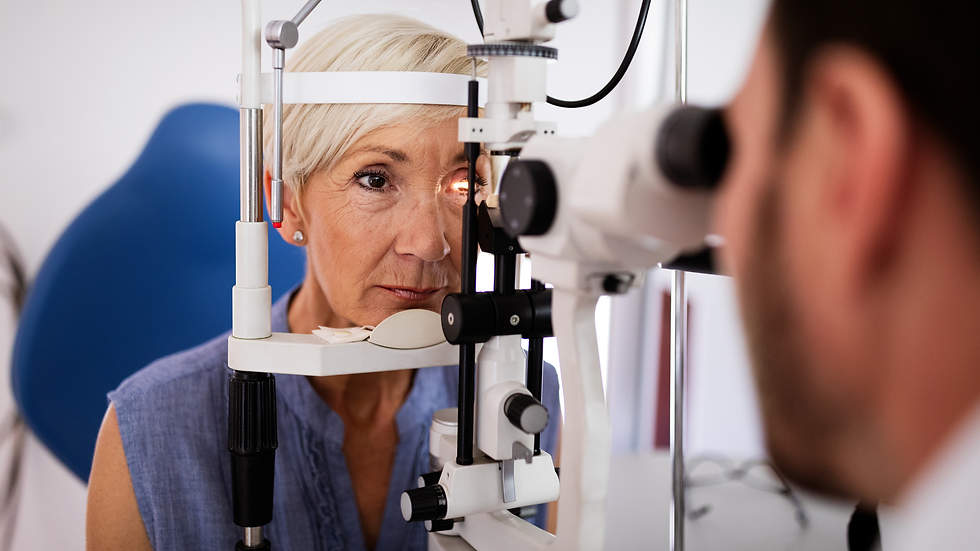
As an ophthalmologist, I was trained to evaluate retinal disease through structure - fundus photography, optical coherence tomography (OCT) scans, and retinal and choroidal angiography. These tools remain essential.
But as an integrative ophthalmologist, I’ve learned that structural damage is often the end result of deeper biochemical and metabolic dysfunction.
Long before retinal cells are lost, they struggle with energy failure, oxidative stress, and impaired cellular repair. Understanding—and supporting—these upstream processes is where photobiomodulation (PBM) becomes clinically meaningful.
The Retina Is an Energy-Intensive Tissue
The retina is one of the most metabolically active tissues in the human body.
Photoreceptors and retinal pigment epithelial (RPE) cells must constantly:
Convert light into electrical signals
Recycle photoreceptor outer segments
Neutralize oxidative stress from light exposure
Remove waste products
In conditions such as dry age-related macular degeneration (AMD), mitochondrial dysfunction and oxidative stress gradually overwhelm this system. From a pathophysiological standpoint, AMD is as much a disease of cellular energy metabolism as it is a structural retinal disease.
What Is Photobiomodulation?
Photobiomodulation uses specific wavelengths of low-level visible and near-infrared light to stimulate cellular function - without generating heat or causing tissue damage.
Unlike retinal lasers, PBM does not destroy abnormal tissue. Instead, it works at the level of mitochondrial biochemistry, supporting stressed but viable cells.
The Key Wavelengths Used in Clinical AMD Therapy
The PBM system that received FDA clearance for dry AMD uses three specific wavelengths, each chosen for distinct biological effects:
~590 nm (yellow light) Targets inflammatory and oxidative stress pathways and is absorbed by retinal tissue involved in metabolic regulation.
~660 nm (red light) Strongly interacts with mitochondrial enzymes, particularly cytochrome c oxidase, improving cellular energy production.
~850 nm (near-infrared light) Penetrates more deeply into tissue and supports mitochondrial respiration and blood flow signaling.
These wavelengths are not arbitrary. They were selected based on decades of laboratory and clinical research showing their interaction with mitochondrial function, oxidative stress, and cellular resilience.
The Clinical Trials Behind FDA Clearance
Photobiomodulation for dry AMD was evaluated in a series of randomized, controlled clinical trials known as the LIGHTSITE studies.
These trials demonstrated that, in selected patients with dry AMD:
Visual acuity improved in some participants
Contrast sensitivity improved (a key functional outcome)
Benefits were seen without retinal damage or safety concerns
Based on these data, the multi-wavelength PBM system received FDA clearance for the treatment of dry AMD.
It’s important to emphasize:
PBM is not a cure for macular degeneration
Structural disease does not reverse
Benefits are functional and supportive, not restorative
From an integrative standpoint, these outcomes are exactly what we would expect when supporting cellular metabolism rather than anatomy alone.
Why PBM Fits an Integrative Retinal Care Model
As an integrative ophthalmologist, I ask a different question than “What structure is damaged?”
I ask: What is impairing cellular resilience, energy production, and repair?
PBM does not replace:
AREDS2 supplementation when indicated
Anti-VEGF therapy for wet AMD
Nutrition, lifestyle, and vascular risk modification
Instead, it supports the biological environment of the retina, helping cells function more efficiently under chronic stress.
Access to PBM: In-Office vs Home Use
Currently, FDA-cleared PBM devices for AMD are available only in select retina practices. This limits access for many patients due to geography, cost, and treatment schedules.
As an integrative physician, I care deeply about practical, scalable options that patients can realistically use long-term.
For that reason, I often discuss home-based red and near-infrared light therapy as a supportive strategy, not as a replacement for clinical PBM, but as an adjunct for mitochondrial support.
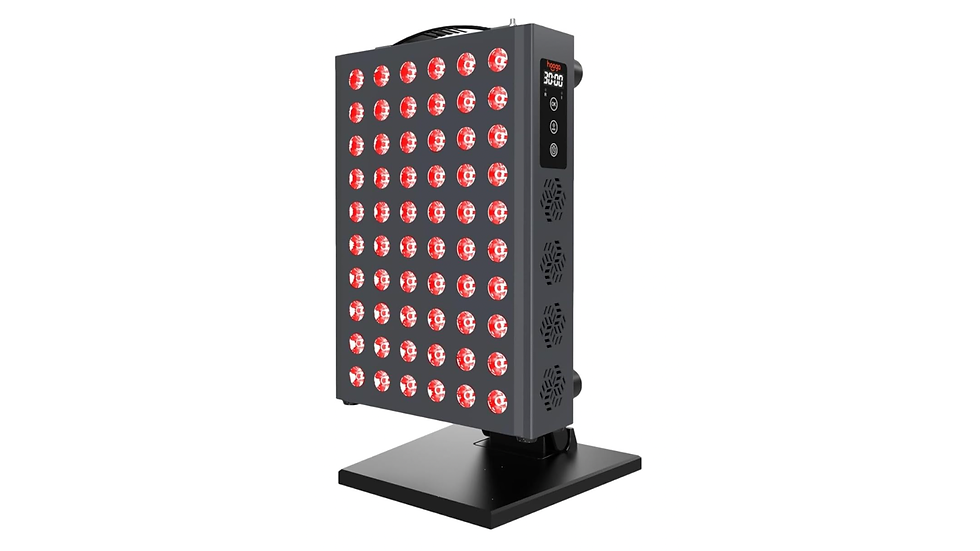
Home Photobiomodulation: A Practical Approach
While home devices are not FDA-cleared to treat AMD, research supports the biological mechanisms of red and near-infrared light on mitochondria and oxidative stress for a number of conditions, ranging from joint, muscle, and skin health to healthy aging.
When patients choose to explore home PBM, I emphasize conservative, low-dose use.
General guidance I share with patients:
Distance: 12–14 inches from the face
Eyes: Eyelids closed (never stare directly into the light)
Time: 3 minutes per session
Frequency: 3 times per week
More is not better. PBM follows a biphasic dose response, meaning excessive exposure may reduce benefit.
I recommend a particular red and infrared device designed for general wellness and mitochondrial support, not medical claims. This is what I use myself and for my family’s eyes in our home.
Why This Matters for Patients Emotionally
Many patients with dry AMD feel they are simply waiting for vision loss.
Photobiomodulation offers a different framing:
Support rather than destruction
Cellular resilience rather than damage control
Engagement rather than passivity
As both a traditionally trained ophthalmologist and an integrative physician, I believe hope should be grounded in biology and evidence, not hype.
The Bottom Line
Photobiomodulation supports retinal health because it aligns with what we now understand about mitochondrial dysfunction, oxidative stress, and aging biology.
By targeting cellular energy systems - rather than structure alone - PBM represents a thoughtful evolution in how we care for the aging retina-
Not by promising cures, but by supporting the biology of vision itself.
Disclaimer
The information provided on this website and in associated content is for educational purposes only and is not intended to diagnose, treat, cure, or prevent any disease.
Photobiomodulation (light therapy) devices discussed on this page, including home-use red and near-infrared light devices, are not FDA-approved or FDA-cleared for the treatment of age-related macular degeneration, glaucoma, optic neuropathy, or any other eye disease.
Clinical photobiomodulation systems that have received FDA clearance for dry age-related macular degeneration are available only in select retina practices and use proprietary protocols under medical supervision. Home light therapy devices are categorized as general wellness devices and should not be considered a substitute for professional medical care. Any general guidance provided regarding home light therapy use reflects biological mechanisms described in published research and is shared for informational purposes only. Individual results may vary, and light therapy should be used conservatively and responsibly.
Always consult with your ophthalmologist or qualified healthcare provider before starting any new therapy, especially if you have a known eye condition, are undergoing treatment, or have concerns about vision changes.
Some links on this page may be affiliate links. This means we may receive a small commission if you choose to purchase through these links, at no additional cost to you. I only share products that align with my educational mission and that I believe may support general wellness when used appropriately. Affiliate relationships do not influence the medical information or clinical recommendations I provide.

Comments