.png)
Dry Eye in Women: Why It’s More Common After 40 (and What Actually Works)

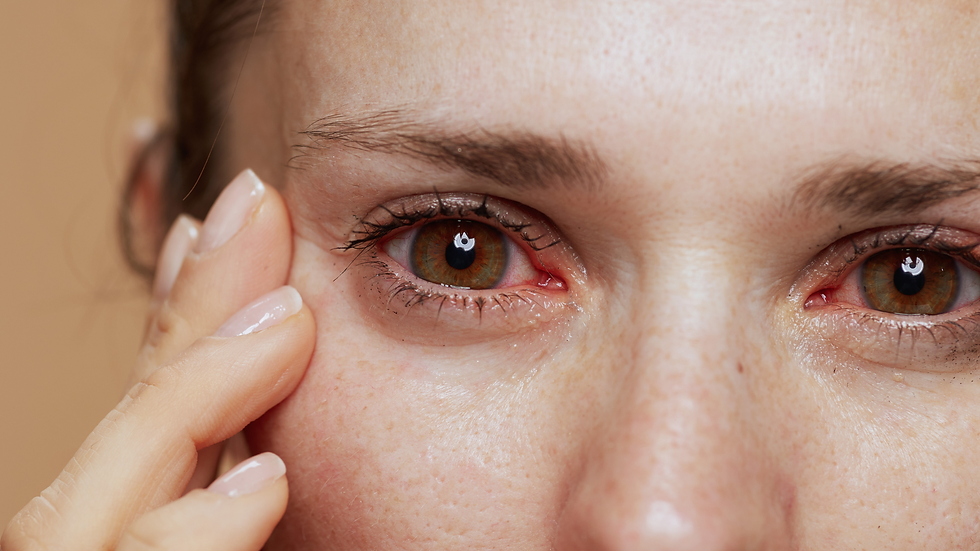
Dry Eye in Women: Why It’s More Common After 40 (and What Actually Works)
If your eyes feel dry, gritty, or constantly irritated—you’re not alone.
And if you’re a woman over 40, there’s a very real reason why this is happening.
As an ophthalmologist, I see this every single day in my practice. Women come in frustrated, often having tried multiple eye drops with little relief. What they’re experiencing isn’t just “dry eye.”
it’s a complex, multifactorial condition driven by hormones, inflammation, and lifestyle. Let’s break down what’s really going on—and more importantly, what actually works.
Why Dry Eye Is More Common in Women
Dry eye disproportionately affects women, especially during perimenopause and menopause. In fact, women are nearly twice as likely to develop dry eye compared to men.
Here’s why:
1. Hormonal Changes
All three sex hormones - estrogen, progesterone, and testosterone - play a critical role in maintaining a healthy tear film.
These hormones support the function of the meibomian glands (tiny oil glands in your eyelids)
When levels decline, these glands produce less oil → tears evaporate faster
The result? Evaporative dry eye, the most common form I see.
2. Meibomian Gland Dysfunction (MGD)
This is the underlying driver in the majority of dry eye cases.
When the oil glands become blocked or inflamed:
Tears evaporate too quickly
The ocular surface becomes irritated
Vision may fluctuate throughout the day
3. Inflammation
Dry eye is not just a lubrication problem, but it’s an inflammatory disease.
Chronic, low-grade inflammation:
Damages the tear film
Irritates the ocular surface
Creates a vicious cycle of worsening symptoms
4. Autoimmune Conditions (More Common in Women)
Conditions like Sjögren’s syndrome, lupus, and thyroid disease can significantly reduce tear production.
If your dry eye is severe or persistent, this is something I always consider as a potential root cause.
5. Modern Lifestyle Factors
Let’s be honest—our daily habits aren’t helping:
Prolonged screen time → reduced blink rate
Air conditioning/heating → increased tear evaporation
Contact lens use
Poor diet (ultra-processed foods increase inflammation)
What’s Actually Happening in Your Eyes
Your tear film has three layers:
Oil layer (lipid) → prevents evaporation
Water layer (aqueous) → hydrates the eye
Mucus layer → helps tears spread evenly
In many women, the oil layer is the problem.
When it breaks down:
Tears evaporate too quickly
The surface of the eye becomes exposed
Symptoms like burning, stinging, and blurred vision develop

What Actually Works: Integrative, Evidence-Based Solutions
This is where most people go wrong—they rely on artificial tears alone.
While drops can help temporarily, they don’t address the root cause.
Here’s what I recommend instead:
1. Eyelid Hygiene (Your #1 Priority)
If you do only one thing—start here.
Daily eyelid care helps:
Reduce inflammation
Clear blocked oil glands
Improve tear quality
My recommendations:
Moist heat compresses to loosen clogged oil glands
Eyelid wipes (especially if there’s debris or crusting)
Tea tree-based products if Demodex mites are present
Hypochlorous acid spray (gentle, antimicrobial)
This is foundational—and often overlooked.
2. Support the Tear Film with Targeted Nutrition
Nutrition plays a powerful role in ocular surface health.
Key nutrients:
Omega-3 fatty acids (EPA/DHA)Support anti-inflammatory pathways and tear stability
Gamma-linolenic acid (GLA)Helps improve meibomian gland function
AntioxidantsReduce oxidative stress on the ocular surface
A whole-food, anti-inflammatory diet—rich in leafy greens, healthy fats, and colorful vegetables—is essential.
3. Reduce Inflammation at the Root
Chronic inflammation is a major driver of dry eye.
Focus on:
Minimizing ultra-processed foods
Increasing polyphenols (berries, green tea)
Incorporating anti-inflammatory spices like turmeric
4. Optimize Your Environment & Habits
Small changes can make a big difference:
Follow the 20-20-20 rule for screen use
Blink fully and consciously
Use a humidifier in dry environments, especially by workstations
Stay well hydrated
5. Consider Hormonal Factors
For some women, especially during menopause:
Hormonal shifts significantly impact tear production
In select cases, I prescribe topical compounded hormonal therapy, though this is must be considered only under a specialist’s care.
When Dry Eye Is More Than “Just Dry Eye”
You should seek further evaluation if you experience:
Severe dryness not improving with treatment
Light sensitivity
Eye pain
Fluctuating or blurred vision
Dry mouth or systemic symptoms
These may signal an underlying autoimmune or inflammatory condition.
My Go-To Dry Eye Routine
If you’re feeling overwhelmed, start here:
Daily eyelid hygiene
Anti-inflammatory diet
Omega support
Screen habit optimization
Consistency matters more than complexity.
A Targeted Solution to Support Your Eyes
If you’re looking for a comprehensive approach, I’ve created a Dry Eye Bundle that combines:
High-quality omega support
Moist heat therapy
Eyelid hygiene essentials
These are the same tools I recommend to my patients every day.

Final Thoughts
Dry eye is incredibly common—but it’s not something you have to “just live with.”
When you understand the root causes—hormones, inflammation, and lifestyle—you can take control of your eye health in a meaningful way.
And the earlier you intervene, the better your long-term outcomes will be.
Dr. Rani (Rudrani) Banik, MD
America’s Integrative Eye Doctor


Comments